Why Your Startup Idea Should Come Third
Wispr Flow was the 8th product its founders built, and they've raised about $360M. CEO Tanay Kothari says the idea is only step 3 of starting a company.
· 6 min read
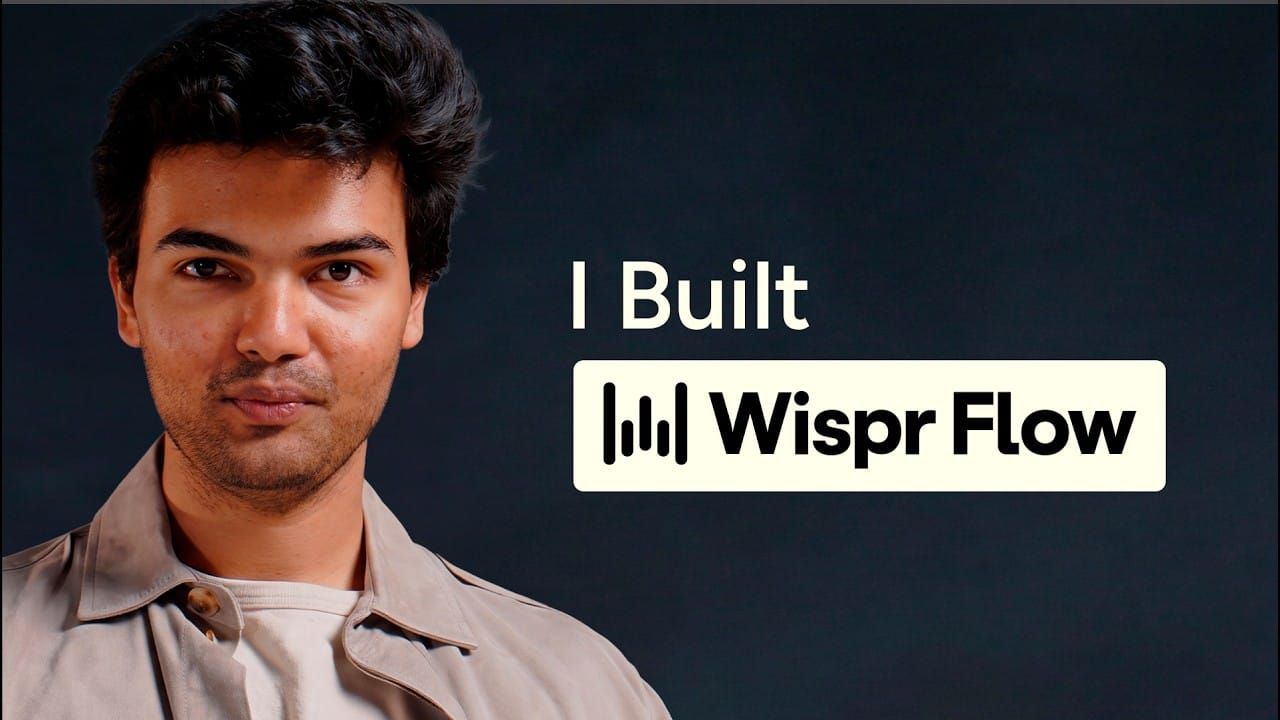
Tanay Kothari, co-founder and CEO of Wispr Flow · Tanay Kothari's YouTube channel
Tanay Kothari is the co-founder and CEO of Wispr Flow, an AI voice dictation app, which he started with his college roommate Sahaj. Wispr has raised about $360 million across 6 funding rounds. Kothari has been starting projects since he was 10 and estimates he has built and killed 70 to 80 products. In this video, a member of the Wispr team asks him how he would start a company in San Francisco today with no co-founder, product or idea.
Summary
Kothari argues that most would-be founders start in the wrong place: the idea is step 3. First comes self-reflection on what you have cared about for years and what you are uniquely good at, then a co-founder who shares your cares and values and complements your weaknesses. The idea should be a problem or customer you commit to, tested fast and killed without sentiment; Wispr Flow was the company's 8th product. Venture capital is a choice to compress 10 years into 1, so take it only if you want that game, and pick investors by checking their references harder than they check yours. These signals are from an interview that Hector did with Tanay Kothari on Tanay Kothari's YouTube channel.
- The Idea Is Step 3. Most people who arrive in San Francisco wanting to start a company go looking for an idea. Kothari says the idea is the third step. The first, which he says 95% of people skip, is self-reflection, and the second is finding a co-founder. The order matters because the first step drives the success rate of everything after it. ▶ 1:19
Quote: “You have 20 ideas a day on ... great business ideas. Right. But so does everybody else.” (Tanay Kothari, ▶ 11:27)
Spotted an error? Email signal@signalful.com and we’ll fix it.