Best of the Week: How Legora puts lawyers to work across the product
Plus Figma’s shared finance tools, Netflix’s answer to YouTube, Khosla Ventures’ disagreement test, and how AppLovin automates work when teams are overloaded.
· 16 min read

Signalful: Best of the Week, November 9–13, 2026
Legora’s legal engineers, Figma’s shared finance tools, Netflix’s long-form answer to YouTube, Khosla Ventures’ disagreement test, and AppLovin’s approach to overloaded teams + 10 Extra Signals

Happy Friday, and welcome to Signalful: Best of the Week. We start with how Legora puts lawyers to work across product, evaluations and customer onboarding, and how Figma turns tools built by its finance teams into shared systems. Next come Netflix’s long-form answer to YouTube, how Khosla Ventures tests whether founders will push back on its advice, and how AppLovin automates work when teams are overloaded. In Extra Signals, we look at why Cartesia was right to reject an investor’s advice to narrow its focus.
1. Legora uses technically fluent lawyers to link customers, product and evaluations
Jacob Lauritzen, Chief Technology Officer at Legora · Latent Space
Legora tracks how each new model performs across legal practice areas and task types, and the people behind that work mix two professions. Chief Technology Officer Jacob Lauritzen says the eval team is a single group of three engineers and three lawyers. Behind it is a wider pool Legora calls legal engineers: typically lawyers with three or four years in big law, some with computer science backgrounds, who are very tech-forward and joined to help change the industry. Lauritzen calls them Legora’s hardest hires. The evaluations they help write are built as realistic projects, such as a due diligence assignment over a 10,000-file data room, with the red-flag analysis and the drafted report graded separately.
Lauritzen also calls them a force multiplier. He describes a pool of about 100 such experts who use the product and talk to clients every day, and Legora draws on that pool both to write evaluations and to help shape the product. Legal engineers also work directly with customers: at large firms they sit with the lawyers, teach them to use Legora and configure their workflows in the product, while forward-deployed engineers take on work that requires code. Legora draws on that shared pool across customer work, product development and evaluations.
Why we picked it: Legal judgment is needed in three places at a legal AI company: deciding what good output looks like, deciding what to build and helping customers adopt it. Legora puts the same scarce people in all three.
Our take: When domain experts are scarce, letting one pool span evaluation, product and customer work keeps quality standards tied to real use instead of splitting expertise across separate teams. The value lies in fluency in both the law and the product, whatever formal background a given legal engineer brings.
2. Figma lets finance build its own tools first, then consolidates the duplicates
Praveer Melwani, Chief Financial Officer at Figma · The a16z Show
“I think we’re in the messy middle right now.” 24:30
Figma’s finance team builds much of its own workflow software. Chief Financial Officer Praveer Melwani gives the example of the company’s credit and collections lead, who rebuilt his workflow as a homegrown system covering invoice tracking, cash collection and reconciliation to NetSuite. Bottom-up building has a predictable side effect: different groups solve the same problem separately. Internal audit chases colleagues to fill in ticket information for its audits, the compliance team does the same for security certifications, and accounts payable goes back and forth when recording accrued expenses. Each could build its own agent to gather and reconcile that information.
Melwani wants specialists to keep building the first versions, because they know what good looks like, and wants a central systems function to turn the best of them into shared platforms. Melwani wants the team under Figma’s chief information officer to work like product managers with business teams, identifying which tools work well and taking responsibility for their dependencies, hosting and long-term maintenance. That organization is still being built. Melwani says Figma has grown faster than its supporting tools, and some teams are further along than others. Core systems of record, where mistakes are unacceptable, are still bought rather than built.
Why we picked it: Bottom-up building and central consolidation appear here as two stages of one process. The people closest to the work build first, and a central team decides which of their tools become shared systems.
Our take: Letting specialists build first surfaces real needs quickly, but it also produces duplicate tools that depend on one person. Durable capability comes from the second step: deciding which tools deserve shared ownership and supporting them properly.
3. Netflix should compete with YouTube through better long-form entertainment
Reed Hastings, Co-Founder and Former Chairman of Netflix · On with Kara Swisher
“It’s hard to out-YouTube YouTube.” 14:08
Netflix co-founder and former chairman Reed Hastings sees YouTube as the company gaining share in a market where competition among the big studios has been fairly stable. YouTube’s strength is attention: creators who want viewers have to be snappy, and the platform has become very good at rewarding that. Longer films made by YouTube creators draw relatively little viewing.
Hastings’s recommendation for Netflix draws on how movies answered television. When television arrived in the 1950s and 1960s, movie viewing fell sharply. In the 1970s, filmmakers raised the pacing and realism of their work, and movies held their place as a major art form for decades. Hastings casts YouTube as the television in that story. He argues that Netflix should push its shows and films to be more gripping, real and connecting, and concentrate on long-form strengths such as live sports, rather than compete on the formats YouTube is known for.
Why we picked it: Hastings argues from a historical precedent rather than a feature comparison. His point is that an incumbent can raise the bar in its own format even when a rival gains share.
Our take: When a competitor wins attention with a format it was built for, imitation means competing where the rival is strongest. Raising the quality of what you already do well is the harder and more defensible response.
4. Khosla Ventures tests whether founders will reject its advice
Vinod Khosla, Founder of Khosla Ventures · Summation
“I often challenge people with things I don’t believe in and see if they disagree with me.” 42:43
Khosla Ventures founder Vinod Khosla wants founders who evaluate his advice rather than follow it. If a founder simply does what he says, he stops working with them, because they are taking his answers instead of weighing his input. His reasoning is about who knows more: he sees a founder every four to six weeks, while the founder spends 80 hours a week on the company. A founder who just defers to him puts both of them at risk.
Khosla says he sometimes tests founders by challenging them with positions he does not believe and watching whether they push back. He describes Patrick Collison as the model: tell him something wrong and he rejects it; tell him something useful and he considers it and reports back a month later on what he did. Khosla says Max Levchin, Jack Dorsey and Sam Altman, founders he has worked with, behave the same way. He wants founders to take in a lot of input, form their own point of view and act on it, and says he has never punished one who was wrong after doing what they believed in having weighed that input.
Why we picked it: Khosla treats a founder who always takes his advice as a warning sign. He tests for independent judgment deliberately instead of waiting for a real disagreement to reveal it.
Our take: An investor who sees a company every four to six weeks knows less about it than the people running it every day, so a founder who adopts every suggestion is handing judgment to the less-informed party. How a founder answers a deliberately wrong challenge can reveal more than agreement does.
5. AppLovin answers overloaded staff by automating work instead of hiring
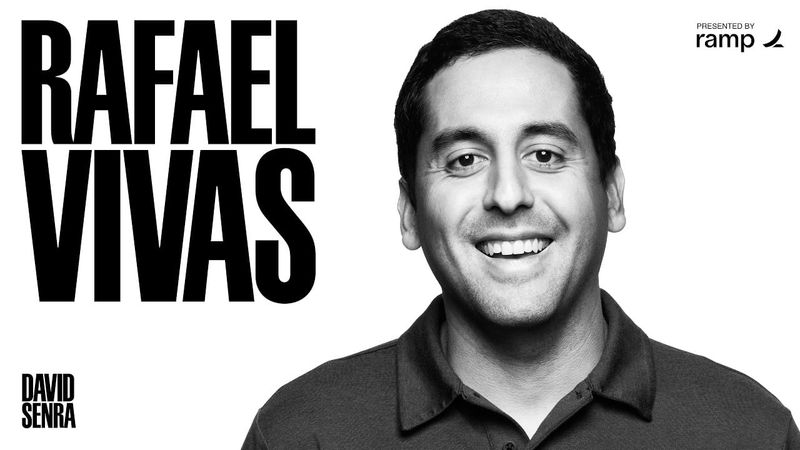
Rafael Vivas, founding team member of AppLovin · David Senra
“There’s no like pure managers in that level. Like everyone is a doer.” 50:28
At AppLovin, an overloaded employee gets two questions instead of a new colleague, according to founding team member Rafael Vivas: what can be built to automate parts of the work, and what work should stop entirely. Hiring a bunch more people is the reflex the company avoids. The CTO still pushes code while running a 100-person engineering organization, and few approval layers stand between staff and decisions.
Why we picked it: Overload is the usual trigger for a new hire or a new manager. AppLovin reads it as a sign that work should be automated or cut, and pairs that with a rule that leaders keep doing the work.
Our take: Most headcount requests are approved on the strength of the complaint, not an inspection of the work. Asking what to automate and what to stop before opening a role forces that inspection. The no-pure-managers rule is what makes the question stick: a leader who still does the work can see which parts a tool could take.
EXTRA SIGNALS (for paid subscribers): Salesforce’s security veto, Index’s price discipline, Figma’s rebuild test, DoorDash’s blank chat box, and Cartesia’s rejected focus advice + 5 more Signals.
Spotted an error? Email signal@signalful.com and we’ll fix it.