Every AI Lab Becomes a Biotech Company
Andrew Huberman predicts Meta, OpenAI and Anthropic will all become biotech companies. The goal, he says, is to read from and write to the brain without surgery.
· 4 min read
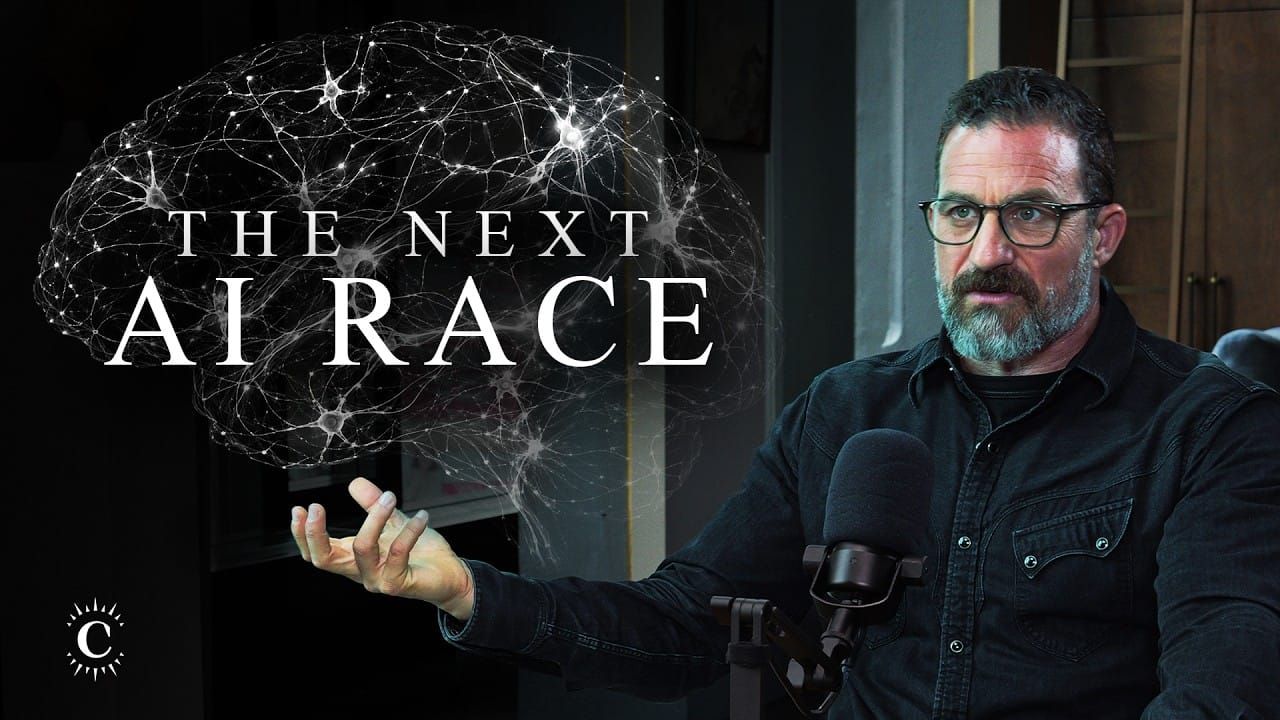
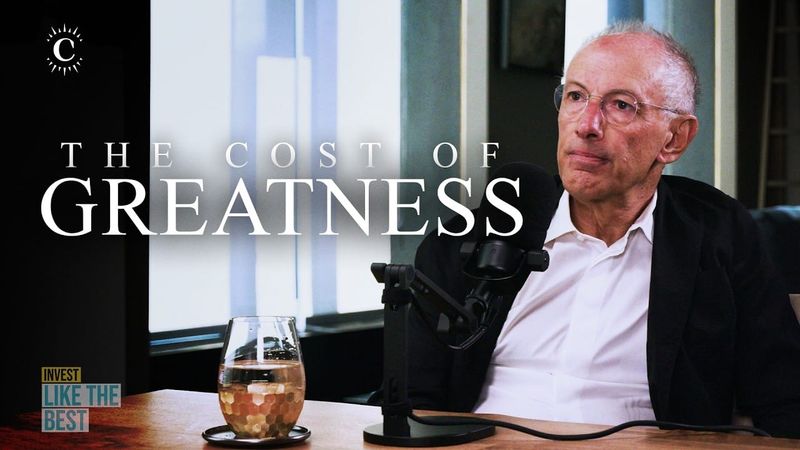
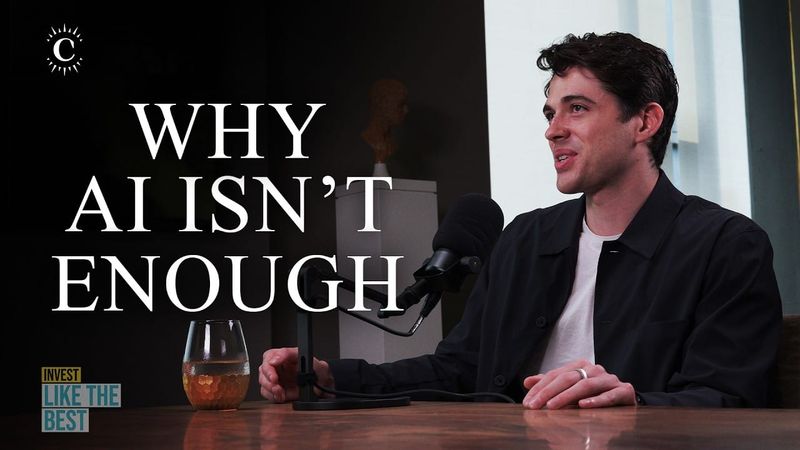
Andrew Huberman is a tenured neuroscience professor at Stanford and the host of Huberman Lab, one of the most popular health podcasts in the world. He was born and raised in Palo Alto, worked 80- to 100-hour weeks as a graduate student, and built his academic career studying vision, brain states, and neuroplasticity. His recent book, Protocols, collects the health practices he says he is certain about, from morning light to sleep architecture. These days he spends most of his curiosity on a newer question: how technology will read from and write to the waking brain. These signals are from an interview that Patrick O'Shaughnessy did with Andrew Huberman on Invest Like the Best.
- Energy Is the Bottleneck. Patrick O'Shaughnessy hears from founders that the most talented people are now limited by their own energy, since AI lets the best of them run several companies at once. Andrew Huberman says the first step is an honest assessment of how much sleep you actually need. His own number is 7 hours; he can get through one bad night and craters after two. Copying Elon Musk's 4 to 5 hours when you need 7 leads somewhere bad. ▶ 2:12
- Survive First, Then Rest. For the first 4 years of a company or of medical school, Huberman's advice is to get as much done as possible without injury or chronic disease. Only after that should you build rest into your days, weeks, and months. He says you can judge whether someone's schedule matched their physiology by looking at them years later: some look 10 years older than they should, and a rare few, like Musk, just have an extra gear. He suspects Jack Dorsey worked deliberately on staying alert and calm by day and sleeping well at night. ▶ 5:07
- Three Steps to Shutting Off. O'Shaughnessy says it can take him 4 hours to wind down after a big day. Huberman lists 3 requirements for falling asleep: turn off your thoughts, slow your heart rate, and forget where your limbs are. You turn off thoughts by moving attention through pure sensations, such as your feet, your breathing, and sounds in the room. Long exhales until the lungs are empty, followed by passive inhales, slow the heart through the vagus nerve. ▶ 7:18
- The Rocking Bed Effect. Rocking puts babies and adults to sleep because side-to-side motion drives compensatory eye movements that tell the brain to stop tracking body position. Huberman says you can mimic this by moving your eyes slowly side to side and up and down under closed lids. An MIT group has built an eye mask that produces these movements with mild stimulation behind the ears and also measures REM directly. He tried it, says it works day or night, and expects products like it within 7 to 12 months. ▶ 10:56
- A Field Full of Clowns. Huberman calls public discourse on health and longevity "a disaster" run by "a bunch of clowns." The bar for entry is close to zero: show your abs, claim to be natural, and you have a following. The gap between the top health educators and everyone else keeps growing, because it's easy to get attention and hard to keep respect. He predicts a downturn as people tire of over-optimizing, followed by a wave of PhDs and MDs doing serious public education. ▶ 19:42
- The Biotech Prediction. Huberman goes on record that Meta, OpenAI, and Anthropic will all become biotech companies. Their leaders understand a lot of neuroscience without formal training, and he says they will all tell you the goal is to read from and write to the brain without surgery. Ultrasound is the likely tool for activating or quieting specific brain areas with precise timing. Neurosurgeons such as his childhood friend Eddie Chang at UCSF already help locked-in patients speak, but that requires opening the skull. ▶ 24:48
- A Dial for Motivation. Huberman describes a non-invasive device that raises activity in the brain's motivation pathways during hard work and lowers it afterward. The result would be a square-wave energy pattern instead of today's crude spikes from caffeine and stimulants. AI would learn which activation levels in which areas suit each person and adjust the dose. He says this, more than chatbots, is the real arms race in AI, and points to Eight Sleep adjusting bed temperature overnight as an early, cruder version. ▶ 25:32
- Implants Come Next. Huberman predicts that within 12 months about 20% of the entrepreneurial world will consider a small vagal nerve stimulator if the procedure is no more invasive than a piercing. Most vagal pathways are excitatory, so stimulation raises alertness, and some patients use it to treat depression. Stanford's Karl Deisseroth has described a suicidally depressed patient who began talking about applying for jobs as her stimulation increased. Neuralink's head neurosurgeon, Matt McDougall, already has a chip under the skin of his hand that unlocks his front door. ▶ 32:05
- Sequence May Not Matter. Neuroscience textbooks say memories and skills depend on neurons firing in a specific order. Labs at Scripps and MIT tagged the neurons used in a learned behavior and found that firing them all at once, or in reverse order, produced the same behavior. Huberman says this finding worries him. It could make brain-writing technology easier, but the same neurons also take part in many other thoughts and behaviors, so careless stimulation could send the system haywire. ▶ 38:41
- Good Stress, Bad Stress. Today's wearables infer stress from heart rate and HRV and treat every rise as bad. A former postdoc of Huberman's, Melissa, is building a cuff that measures autonomic nervous system activity directly. Her early data suggest that stress from work you love can set you up for better sleep and more focus. Accurate feedback would show you which parts of your day really drain you and how long each stressful interaction lingers. ▶ 47:28
- The Big Four of the Brain. Huberman calls Sam Altman, Mark Zuckerberg, Dario Amodei, and Elon Musk "the athletes of brain exploration," and says most people don't realize it. Amodei started out recording from retinas in a neuroscience lab. Neuroscience has always gained from outsiders, though engineers learn quickly that the brain is not a computer. Huberman's own focus is defining waking brain states as precisely as the field has defined sleep stages, which he calls the biggest open problem and very solvable. ▶ 1:09:26
- Follow the Curiosity. In graduate school, Huberman joined a fashionable lab but kept sneaking into Barbara Chapman's lab at night to run experiments. Chapman told him his success would depend on how badly he wanted to know the answers to his questions. He switched labs and published 8 first-author papers with her. His lesson for founders is to match the work to your genuine curiosity, because doing otherwise is "a kind of slow death." ▶ 1:13:51
Watch the full video at https://www.youtube.com/watch?v=_QSX3BF9UX0.