Why Interfaces Still Matter
Atlassian's Mike Cannon-Brookes says \"headless is brainless.\" With agents writing the code, he argues design and experience become the way enterprise software stands out.
· 5 min read
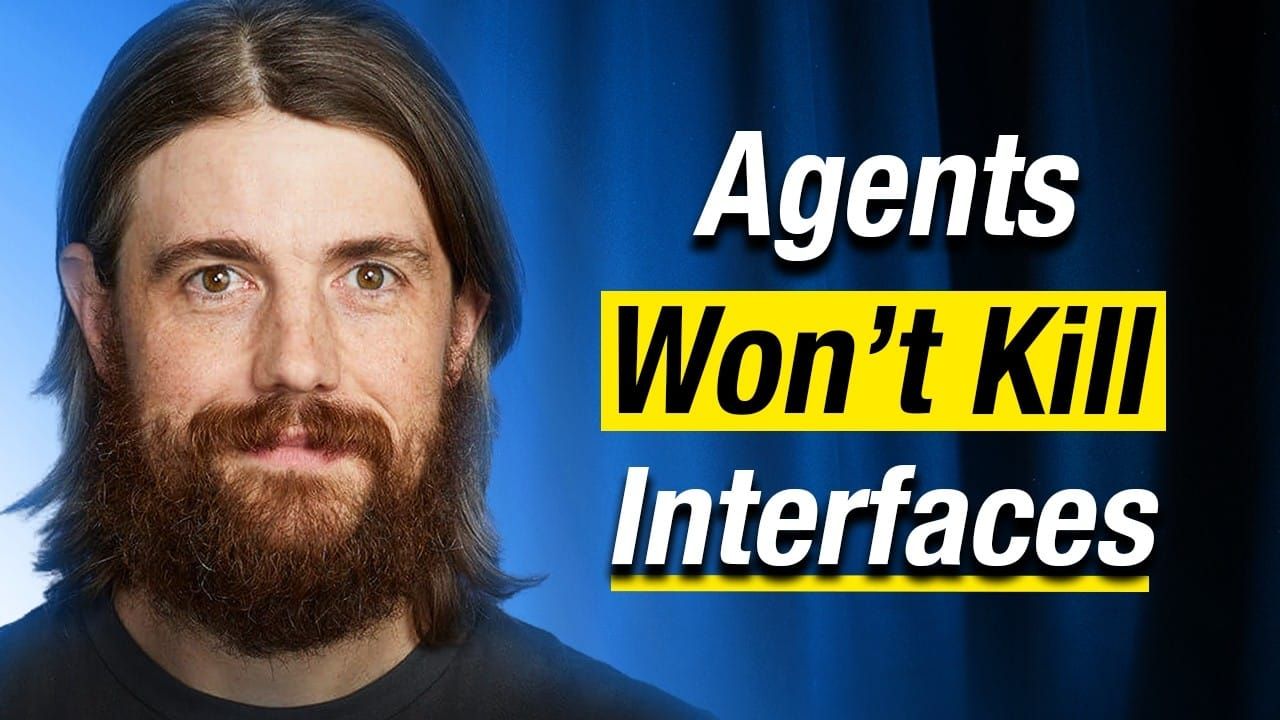
Mike Cannon-Brookes, cofounder and CEO of Atlassian, interviewed by Harry Stebbings (20VC)
Mike Cannon-Brookes is cofounder and CEO of Atlassian, the maker of Jira and Confluence. He has been at it for a couple of decades, works with about 10,000 colleagues, and describes himself as a former programmer who is now a full-time manager of people and storyteller. Atlassian's Teamwork Graph connects a company's documents, decisions, people and code so that agents can query them. Confluence alone is above $1.5 billion in annual recurring revenue and growing more than 25% a year. He recorded this conversation in Amsterdam, during Atlassian's product announcements.
Summary
Mike Cannon-Brookes bets that design and experience, not raw access to data, decide who wins enterprise software once agents can do the work. He says "headless is brainless", while Atlassian still runs one of the leading MCP servers so that agents can read and write its graph. On models, he distrusts most claims about specialized in-house models, uses no Chinese models in production, and expects the price of inference to fall further than people think. His own scarce resource is time to think, which he is trying to protect. These signals are from an interview that Harry Stebbings did with Mike Cannon-Brookes on 20VC.
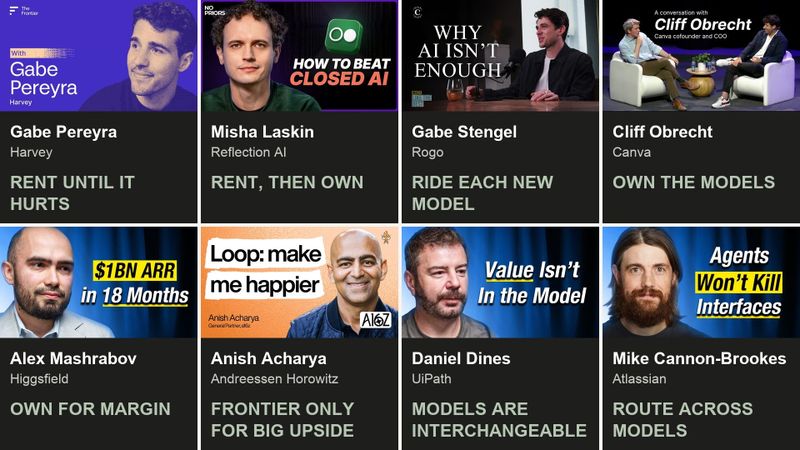
- Headless Is Brainless. Cannon-Brookes says a company that gives up on its user interface is making a brainless bet. Atlassian is still heavily invested in MCP and CLIs, and he says it runs one of the top five MCP servers in the world. Agents and harnesses use it to contribute to the Teamwork Graph and read from it, which shows off the quality of the graph. If the interface stops evolving to solve more of the customer's problem, he says, the company is in trouble. ▶ 3:40
- Design Is the Differentiator. When building technology is cheap and abundant, Cannon-Brookes says design and experience become one of the ways a product stands out. Beating 90% of today's apps is easy, he says, but in 5 years the same app will beat only 20%. Standards keep rising, so keeping an experience current takes constant R&D and craft. Atlassian is investing in design more than it ever has. ▶ 5:04
- No Magic Button. Cannon-Brookes expects horizontal agents, vertical agents and traditional interfaces all to exist at once. Agents running in Claude, Codex, Cursor, Teams and Slack already feed Atlassian's platform, and partners such as Figma and Databricks let customers reach their functions from inside it. Selecting a number in a Confluence page and asking Databricks to check it is a quick answer, while heavy analysis still belongs in a BI tool. He calls himself a big bear on the idea of one button that does everything. ▶ 6:28
- Text Boxes Suck. Cannon-Brookes says a blank one-line text box with unlimited power is a terrible interface, and most users treat chat like Google search. The open design problem is how to explain an agent's power and surface the right functions at the right time. He says this is the first time in a long while that Atlassian's designers are solving foundational problems, and he compares it to the move to mobile. ▶ 10:18
- The Provenance Problem. When Codex opens a pull request, it is unclear whether the developer or the agent did the work, and teams will want to filter for human comments or agent comments. Cannon-Brookes says provenance and accountability are among the hardest design problems of the agent era. The same watermark can sit on an essay the AI wrote from a prompt and on one a person drafted and the AI polished. He suspects people will get used to AI-touched content, and that human-crafted work will stand out. ▶ 11:01
- Open Yes, Chinese No. Cannon-Brookes sees customer pushback on Chinese models in some places and none on open models. Atlassian uses Nvidia's Nemotron and Mistral, uses no Chinese models in production, and treats model choice as a job for the customer's outcome and price. He notes that US models increasingly train on Chinese ones without saying so. He separates the geopolitical question from the technical one, and says enterprises that refuse a cheaper open model whose contents they can inspect are making a hard long-term choice. ▶ 17:40
- Fine-Tuning Is Not Training. Cannon-Brookes says the jury is out on specialized models. Companies that claim to have trained their own model for a million dollars have almost always tailored a Chinese model built at far greater cost. Atlassian fine-tunes open-weight models for specific jobs and does not call them its own models. He says a specialized model has to stay ahead of the general one on price and performance, and the foundation models have already smashed many startups that tried it two or three years ago. ▶ 21:50
- Cost Discipline Arrives. Cannon-Brookes says well-funded private companies that ignore cost are not building the discipline they will need. Large enterprises already care about price and performance, and Atlassian sells products that show customers their token spend by team and model. Its AI gateway team routes across models internally, so customers get the best answer at the lowest price and speed. He tells product teams to build magical features first and cut cost later, since five users and five million users are different problems. ▶ 26:21
- Inference Gets Cheap. Asked what costs a lot today and will not in 5 years, Cannon-Brookes says model inference. He points to the capital, energy, startups and talent now aimed at price per watt, from new chips to better data centers to distillation. If something is nearly free, he agrees people will use far more of it, but he says production of technology already runs ahead of consumption. He changed his mind in the last 12 months on how far inference prices will fall. ▶ 32:20
- Imagination Asymmetry. Cannon-Brookes borrows a phrase from the Culture Amp founder: the world is moving from information asymmetry to imagination asymmetry. Knowing something others do not matters less, and applying AI to problems in unusual ways matters more. He expects a creativity-driven economy and calls this the most dynamic stretch in technology he has lived through. His advice is to treat your business from first principles. ▶ 35:08
- A Graph That Stays Fresh. The Teamwork Graph infers answers ahead of time, the way Google's index does for the web, but tailored to each company. Cannon-Brookes says it is valid only for today because the people, projects and teams keep shifting. He does not think corporate data is worth much sold in bulk and cites a $30 million sale of Spirit Airlines data. Knowing he wrote Java in 2003 is useless to Atlassian now, while knowing he was once a programmer still helps him explain concepts. ▶ 40:05
- Protect Slow Thinking. Cannon-Brookes says his biggest constraint is time, and he is trying to carve out a few hours a week for long thinking. In the agent era it is easy to stay busy because agents keep pulling at your attention, so year-over-year change is harder to see than day-to-day change. He thinks learning to slow down to go fast will be a skill everyone has to build. He also worries that founders raise easy pre-seed money and tap out, because energy comes from working with smart people on hard problems. ▶ 36:56
Watch the full video at https://www.youtube.com/watch?v=_qRv_CveLik.