Can Robotic Labs Bring Drug Chemistry Back to America?
The years of making and testing drug candidates now happen almost entirely in China. Warp Sciences' Kevin Weil explains his $215 million bet on robotic labs in the US.
· 4 min read
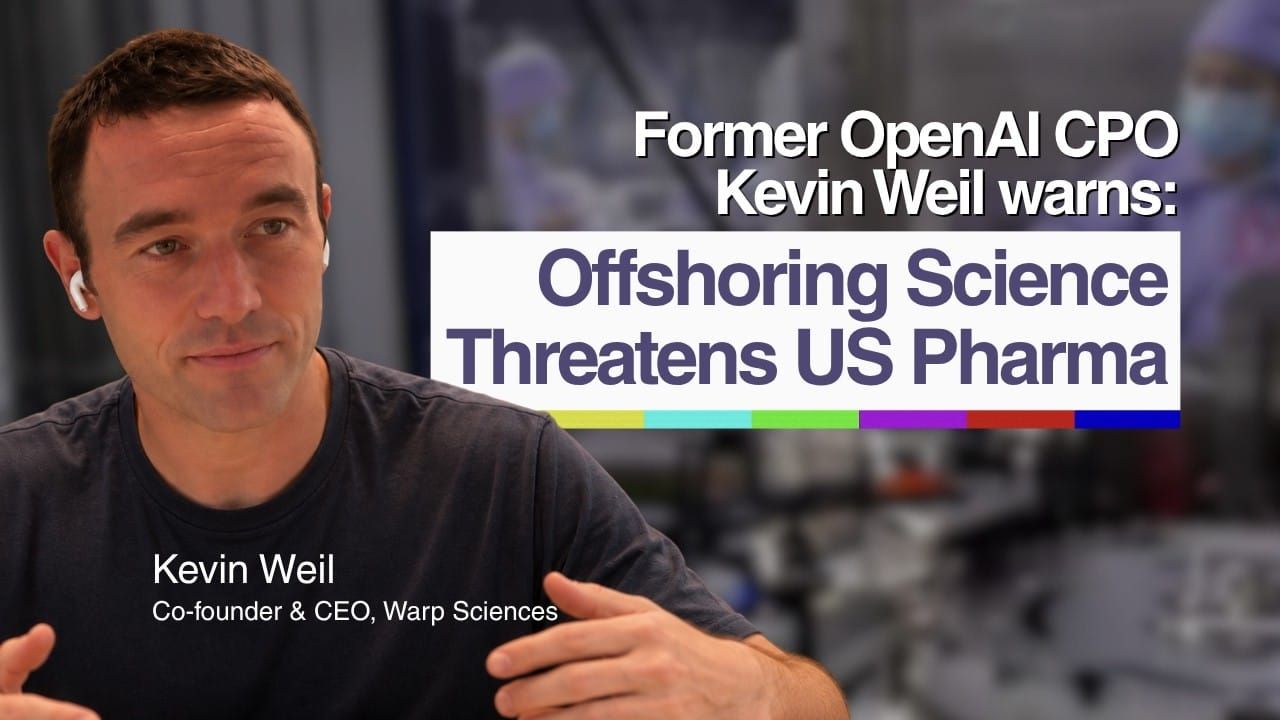
Kevin Weil, co-founder and CEO of Warp Sciences · MTS
Kevin Weil is co-founder and CEO of Warp Sciences, which builds robotic chemistry labs for drug research. He was previously chief product officer and then head of science at OpenAI. Warp Sciences came out of stealth on the day of this interview with $215 million led by Lightspeed.
Summary
Weil says the three to five years drug developers spend making and testing variations of a candidate molecule now happen almost entirely in China, which he sees as a strategic risk like the loss of manufacturing. Warp Sciences plans to bring that work back to the US by using robots and AI to make it affordable, running as a contract research organization for drug developers. He argues that labs running at scale will also produce the data AI models need to get good at chemistry and biology. From his time at OpenAI, he concluded that science is where AI will have its biggest impact. These signals are from an MTS interview with Kevin Weil.
- A Robotic CRO. Warp Sciences uses AI and robotics to help the world discover medicines faster, building robotic labs that do science at scale in the US. It raised $215 million led by Lightspeed, with IVP, Mayfield, Lux, Menlo and Scribble Ventures among others. It is a preclinical contract research organization starting with small-molecule chemistry. Warp isn't developing its own drugs. It is building infrastructure so everyone who does can go faster. ▶ 0:40