The Company Outgrew Its Founder
Adam Neumann says WeWork started to fall apart on one walk down 54th Street, minutes after Masayoshi Son wrote $4.2 billion on an iPad.
· 5 min read
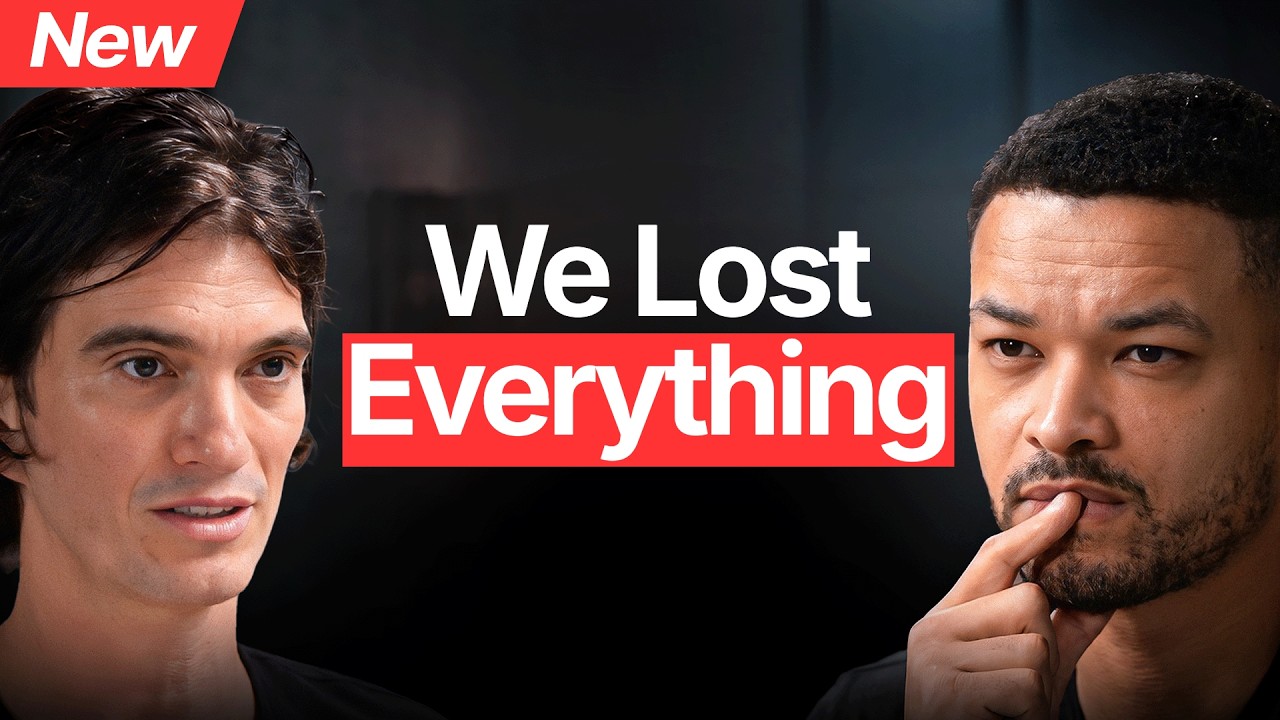
Adam Neumann, WeWork co-founder and Flow founder, interviewed by Steven Bartlett (The Diary Of A CEO)
Summary: Adam Neumann traces WeWork's collapse to one walk down Manhattan after Masayoshi Son offered $4.2 billion. By the time he reached the office his ego had taken over and the mission was gone. In his telling, the business grew faster than he did, investors chased a bigger number when they could have taken a $20 billion exit, and a bank call stripped him of control minutes after he stepped down. His remedy for founders is to know yourself before you take growth, and to pick investors, friends and a spouse for how they'll treat you on your worst day.
- The 54th Street Walk. Neumann marks the start of WeWork's end at a single moment in 2016. Son gave him 12 minutes in the lobby and a 16-minute car ride, then wrote $4.2 billion on an iPad and handed him the pen. The night before, the board had planned to raise $300 to $400 million, stop growing, turn profitable and go public. Walking from 54th Street to HQ on 18th Street, Neumann did the math on a $20 billion valuation and his 25% stake, and "by the time I walk into HQ 18th Street, I forgot what we were all about."
- Ego as Desire. Neumann says ego and desire are the same word, and you need huge desire to build huge things. The danger is that unmanaged ego blinds you. A high-growth company makes 100 decisions a day and needs 98 of them right; a blinded founder gets 90 or 95, and the mistakes compound as fast as the business. Because great companies are led from the top, "the moment I lost it everybody lost it."
- Founder Growth Rate. "In WeWork, the business grew faster than I could grow. That's where everything went wrong." When a company outgrows its founder, Neumann says, it either crashes or the founder holds it together and ends up unfulfilled. Handling growth means handling ego, money and relationships, and if growth outpaces that capacity "something is going to crack." Before jumping on growth someone offers you, check that you're ready for it and that it fits your mission.
- Creator Versus Protector. Neumann calls himself a creator who is weak at protecting, and says focus is the opposite of his superpower. Ben Horowitz told him other founders bring 9 ideas to a board meeting and maybe do 1, while Neumann shows up with 9 new businesses. He can run 3 to 5 things well and fails at 10 to 15, so he needs trusted people around the table whose job is to say no. Quoting Rebecca's grandfather: "It takes one lion to make a fortune and 10 lions to watch it."
- Paper Walls. WeWork went from 1 building in year 1 to 2 buildings a day in year 9, across 130 cities and 50 countries. Neumann credits a habit of asking why. When every contractor quoted $30,000 to $45,000 for a wood floor, he asked for a breakdown of pieces, nails, glue and labor, offered a 15% margin on cost, and got the floor for $12,000. Those contractors became WeWork's internal construction company, and his rule stands: "whenever you ask someone why and they don't want to answer you, what are you hiding?"
- Stop Growing to Profit. At peak, a WeWork building paid back its investment in 6 to 9 months, against 24 to 36 months for a typical retail store. Every new building loses money while it ramps, so a city adding 30 buildings a year looks unprofitable even when the mature ones are making money. Demand outran supply, so "all you have to do in a high growth business that's working to turn it profitable is stop growing." Revenue doubled from about $950 million to $1.8 billion, and Neumann names the mistake as signing long-term leases against short-term member commitments, which Flow avoids with management deals.
- The Advice He Ignored. Marc Benioff called and told Neumann to fly to Japan, say no to Son, and take WeWork public at $5 billion after a $16 billion private round. The pitch was to sell 20%, let investors feel they got a bargain, and learn to be a public CEO before the valuation climbed again. Neumann didn't listen because he hadn't known Benioff long enough, and "not the kind of person that I was then." His takeaway: when a planned $300 million raise becomes a $3 billion offer overnight, stop and ask why you want it and whether you're ready.
- The $20 Billion Exit. In March 2018, Son offered to buy WeWork for $20 billion in cash: $10 billion to existing investors and $10 billion onto the balance sheet, with management keeping 30% and earning up to 51%. The company was losing about $2 billion a year at the time. Neumann says a special committee, including the Benchmark board member, negotiated from March to October chasing $32 billion. By the time documents were ready on December 24, 2018, SoftBank's stock had fallen, Son walked, and WeWork was locked into growth commitments that forced it into an IPO it wasn't ready for.
- Investor History. Neumann tells founders to check whether an investor's track record clashes with founders, and if it does, "park them." He names Benchmark as the firm that pushed out him, Travis Kalanick and Jack Dorsey, and calls that the old venture capital playbook. At Flow, a16z put in $470 million across the Series A and B and the Neumann family put in $350 million so they buy and sell together. After each 8:30-to-5 board meeting he takes Marc Andreessen and Ben Horowitz to dinner and opens with "Please tell me what I can do better."
- Stab the King. Neumann says he controlled the board and stepped down as CEO by choice after a bank head promised $2 billion in funding for WeWork and said his personal debt would be handled. Minutes later the bank sent a letter citing a change-of-control breach: repay $460 million in 15 days, with interest compounding daily, or lose shares carrying 5-to-1 super-voting rights. He went from 13,000 employees to 3 in a week, and Son paid the bank debt in exchange for control. His lesson: "if you're going to stab the king, kill. If you're not going to kill... we're going to come back again."
- Belief When It's Crashing. Five days into the collapse, Neumann's spiritual teacher called with 2 reminders: love thy neighbor as yourself, which starts with forgiving yourself, and "the darkest moment of the night is a second before dawn." Belief gets tested when friends question you and the phone stops ringing. The next morning at 6 a.m., Neumann walked in smiling to 3 partners who had joined to run a family office and were now facing negative $400 million in compounding debt. About 10 days later, he says, things started turning around.
- The Worst-Day Partner. Neumann woke up crying and told Rebecca they'd lost everything, then admitted he never put $100 million in her name and had signed the personal guarantee they agreed he wouldn't. She offered to move in with her mother upstate or homeschool the kids in Costa Rica, and added, "you're much more sexy when you're broke." Later, when SoftBank's settlement came with a delayed payment, she rejected it: pay by Friday 8 a.m. or go to court Monday, and the money landed at 4:30 a.m. before she gave birth at 8. His first lesson for founders: choose your life partner, friends and business partners for the worst day of your life.
Watch the full video at https://www.youtube.com/watch?v=IQ4JVWdj4Q0. Read the full transcript at https://www.usetranscribe.io/yt/IQ4JVWdj4Q0/wework-founder-collapse.


