Software Collapses Into One Text Thread
Instinct has no app, just a phone number and an email address. It's growing 10% a day and already handles $1 billion a year in purchases.
· 5 min read
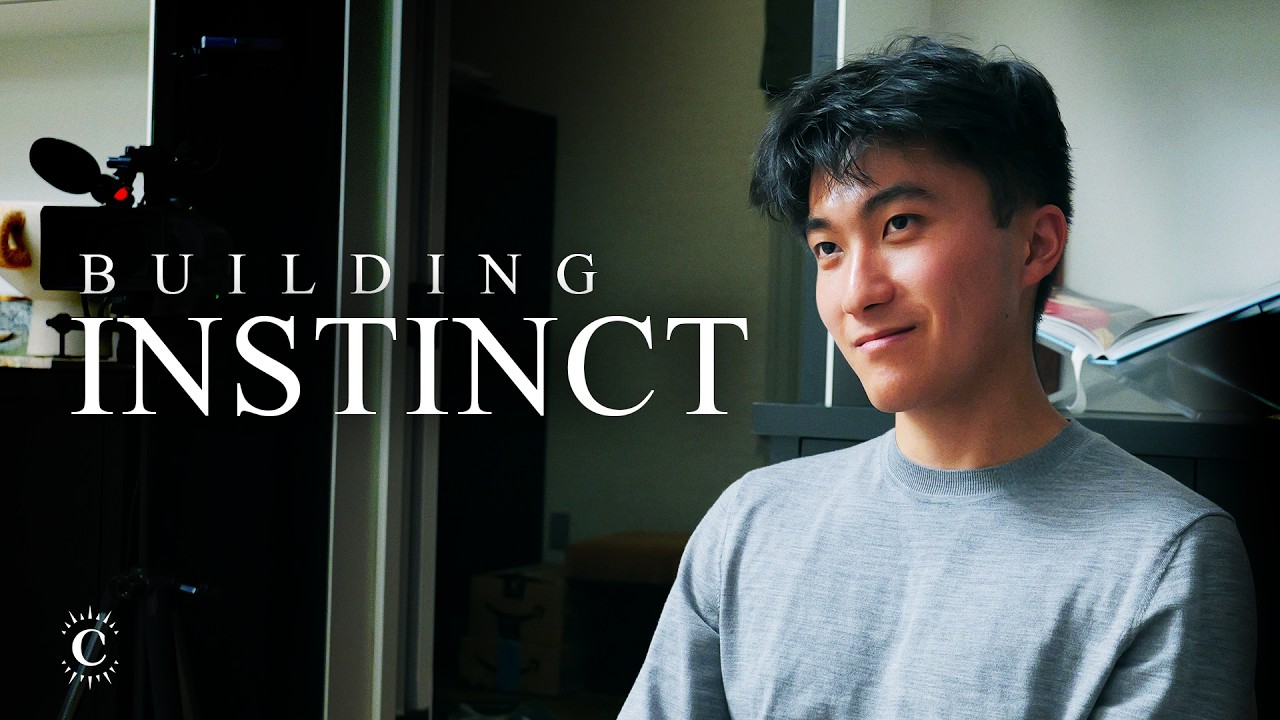
Noah Shinn, founder and CEO of Instinct, interviewed by Patrick O'Shaughnessy (Invest Like the Best)
Summary: Noah Shinn says Instinct, a personal assistant with its own phone, computer, and email address, is growing 10% a day on invites alone and already routes over $1 billion a year in transactions. He bets most digital behavior moves into one text or voice thread that's free to users and paid for by merchants through a take rate. If he's right, businesses paid for the underlying service gain volume, and businesses paid for attention lose it. The hard constraint is compute, which has to be bought months ahead for a user base that doubles every week.
- No App Required. Instinct has no app: it has its own phone number, computer, and email address, so you text it, call it, or email it. Shinn says the computer lets it do anything you'd do on the internet yourself. It calls you only when something is urgent, such as a document that needs your signature by 3 p.m. when it's 2:55 (it has called him about 3 times in several months). He says Instinct needs no grand vision pitch, because people have pictured this assistant since they first used ChatGPT in 2023.
- Understandability First. Shinn's earliest product rule was to focus only on understandability: can the user predict what happens when they ask for something? He credits that rule for the engagement numbers and the 10% daily word-of-mouth growth. The rule reaches down to the shape of each message: people read about 80% of a first line, 50% of the next, then taper off, so Instinct puts the point in the first 30% of a reply. Shinn treats how the product feels as the differentiator once capabilities converge.
- Invite Math. Instinct launched to about 200 friends and family with 5 invites each, and the next two days read 205, then 210. Daily growth crept from 1% to 4%, jumped to 6% to 9% once a couple thousand users started posting use cases online, and now runs 10% to 11% day over day with $0 spent on marketing. That means roughly 10% of users decide every day to give away one of their 5 invites. Invites have sold on eBay for about $300, and Shinn says some people email him, embarrassed, asking for one.
- Compute Lead Times. Shinn spends about 40% of his time on compute, because at 10% daily growth Instinct's compute needs double roughly every week. Buying 2x capacity lasts a week; buying 5x lasts under 3 weeks. New capacity takes several months to come online and costs 3 to 4 times more on short notice, so a wrong forecast is wrong by 3 to 4x. Even at 5% to 8% a day, compounding over a 3 to 4 month lead time reaches 100 million users.
- Cheap Frontier Serving. Shinn says Instinct matches Opus 5 on engagement, A/B tests, and internal evals at a very low cost per user. Much of its work runs in the background and can finish in minutes or hours. Batch deployments for that work run 3x, 5x, or 8x more efficiently on the same hardware, and those gains stack with smaller ones (30% here, 6x there). His personal goal, which he won't commit to yet, is to keep Instinct free for everyone for life.
- Background Token Demand. Instinct wakes and sleeps on its own through the day. Shinn's example: it wakes at 6 a.m. because you wake at 7, checks that your day is ready, decides not to bother you, then wakes at 4 p.m. to handle something you didn't know to ask for. In coding agents, most tokens follow a user's prompt; in Instinct, the interactive part is the smaller share. Shinn expects the compute this requires to run orders of magnitude above what anyone planned for.
- Time to Trust. Trust takes several weeks to build, and Shinn is fine with that because users should share data at their own pace and can take it back anytime. At 3 weeks, 40% of users have given Instinct a personal credit card. The team tracks time to first credit card, first password, or first sensitive item as its trust metrics. Users who connect at least one sensitive item retain at 80%, which O'Shaughnessy called crazy for consumer tech.
- Decoupled Watchdogs. Every piece of content Instinct reads passes through firewalls that can block malicious text trying to talk the agent into something. A separate system, outside the agent and its incentives, watches each thought and action and can pause, approve, or reject it before it runs. The same check catches hallucinations, such as a proper noun the model invented through a sampling error, before it turns into a tool call. Early versions had none of this, and Shinn says the team responded by building a new system that handles these failures as a class.
- Standing Objectives. Instinct works toward standing goals (build trust, make the user feel safer, catch what they drop) and completes tasks as one way to meet them. Shinn argues an agent that only executes prompts will carry out an ill-intentioned request because it just does what it's told. He calls an assistant smarter than its user that nudges them toward unwanted purchases "a very dangerous reality," and names ad-funded platforms like Google, TikTok, Instagram, and Snapchat as the model he won't build. He says the objectives make Instinct sturdier on edge cases while it still does everything a task-based product does.
- Trusted Person Network. Two Instinct users can let their agents talk directly, so you state that you want to meet someone by Friday and the agents work out the time. Each connection has its own access level: spouses often share everything, while a colleague might see only a work calendar. If a connection goes digging past what you granted, your Instinct texts you about it, and the relationship takes the hit. One group of 6 friends has Instinct plan a new outing every week from their availability and Spotify tastes, then route a single Uber to pick everyone up.
- The Take Rate Range. Instinct already handles over $1 billion a year in transaction volume on a small invite-only base, and half of it is travel. Shinn plans a blanket take rate charged to merchants and compares it to Apple Pay, where the user pays nothing. He's aiming above the 2% to 2.5% that roughly 40 companies split on a digital payment, toward Shopify (2.5% to 3%), Amazon (upwards of 10%), and Apple's 30% on in-app purchases. Boutique hotels already offer up to 30% per booking, and Shinn says where Instinct lands depends on how much distribution power it earns.
- Attention Versus Service. Shinn sorted digital businesses by how much revenue comes from user attention and how much from delivering the underlying good. Businesses paid for the service win because an agent cuts the friction to buy to near zero: a car is always waiting when your calendar says you need one, and Instinct texts as you land to ask if you want yesterday's dinner sent home. He expects that to raise Uber's and DoorDash's transaction volume, while apps that profit from unwilling scrolling lose the most. His advice to incumbents is to turn agent access on for 1% of users and measure volume before committing.
Watch the full video at https://www.youtube.com/watch?v=Am7IWP8IpEc. Read the full transcript at https://www.usetranscribe.io/yt/Am7IWP8IpEc/personal-ai-assistant.


