How to Stop AI From Making Everything Look the Same
Stripe's design team found an MCP over its docs gave 3 people 3 different results. Katie Dill on encoding standards so AI-built products don't become zombie UI.
· 5 min read
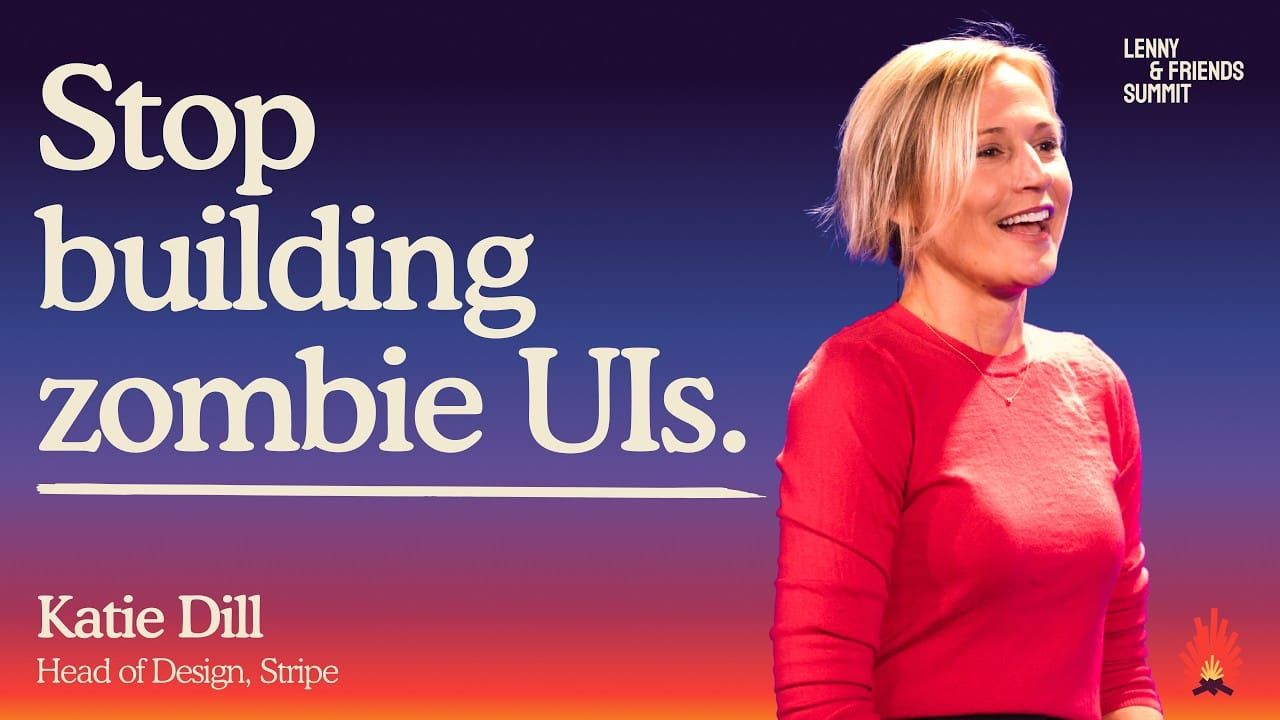
Katie Dill, head of design at Stripe, talk at the Lenny and Friends Summit · Lenny's Podcast
Katie Dill leads design at Stripe, the payments company, where her team works on products, brand and events. Her team designed the Lenny and Friends Summit, where she gave this talk. Stripe's design group is building tools that let anyone at the company go from a prompt to production while keeping Stripe's standards.
Summary
Dill compares the AI building boom to the post-war construction boom, when builders copied modernism without its intent and filled cities with interchangeable "zombie buildings." AI pushes the same way: models give the most probable answer, work looks finished too early, and cheap output feels disposable. Her answer is four habits: hold a point of view, encode standards into the tools AI uses, keep an editor who refuses to treat built as good, and spend AI's savings on new interfaces and craft. Stripe's own example is a design-system command-line tool with full templates and flows that made AI output consistent where documentation alone did not. These signals are from a talk Katie Dill gave at the Lenny and Friends Summit, published on Lenny's Podcast.
- The Zombie Building Boom. After World War II, builders copied modernism's simple geometry and bare surfaces without the intent its founders had, and the thinking got thinner with each copy. Banks that once signaled trust became interchangeable boxes, and the pattern ran for decades. Dill sees the same risk now: teams of 3 can do what took 30, and everyone can build. Without care, the result is "zombie UI" that is monotonous, vacant and uncared for. ▶ 0:06
Quote: “Zombie buildings all over the place. Nothing differentiates them. Nothing says this is intentional.” (Katie Dill, ▶ 1:28)
Spotted an error? Email corrections@signalful.com and we’ll fix it.